
_2026_Blog%20Featured%20Graphic_Impact%20of%20After-Tax%20Rollover%20(1).png)
If you are already saving into your Chevron ESIP 401(k), you’re off to a good start in preparing well for your retirement. Many Chevron employees know that in 2026, they can save up to $24,500 in Pre-Tax or Roth employee salary deferrals if they are under 50. If they're over 50, they can contribute an additional $8,000 Roth , and if they're between 60-63, they can contribute an additional $11,250 to Roth. However, many do not have a good understanding of the after-tax source in the ESIP 401(k), how it works, and how to make the most of it. So let's dive in.
Chevron 401(K) Contribution Sources
There are 3 sources available in the ESIP 401(K) plan at Chevron:
- Pre-Tax: Contributions are made before taxes, grow tax-deferred, and, when withdrawn, you will pay ordinary income taxes.
- Roth: Contributions are made after taxes, grow tax-free, and can be withdrawn tax-free.
- After-Tax: Contributions are made after taxes, grow tax-deferred and when withdrawn, the contributions are tax-free but any earnings are subject to ordinary income taxes.
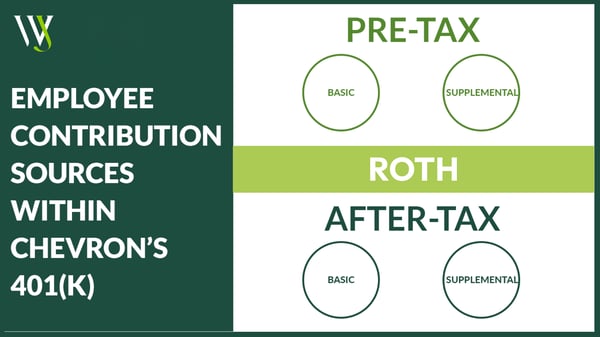
Pre-Tax and Roth Contributions to Chevron’s 401(k)
The contribution limits stated above for salary deferrals ($24,500) apply for both Pre-Tax and Roth.
For example, if you are 40 and you contribute $8,500 to your ESIP 401(K) Pre-Tax source, you would only be allowed to contribute $16,000 to your ESIP 401(K) Roth source.
If you're over 50, you can contribute an additional $8,000 ONLY to Roth, and if between the ages of 60-63, you can contribute an additional $11,250 ONLY to Roth. This Roth-only rule for catch-up contributions was newly rolled out in 2026.
Whether it's preferable to make Pre-Tax or Roth contributions depends on your unique personal income and tax situation. But, if you are maxing out Pre-Tax or Roth contributions in your ESIP 401(K), and you want to save even more for retirement, you can start making contributions into the After-Tax source. After-Tax contributions are in addition to the contributions you can make to Pre-Tax or Roth sources.
After-Tax Contributions in Chevron’s 401(k)
After-Tax contributions, while an excellent way to save more in the ESIP 401(k), are not as tax-efficient as the other two sources, Pre-Tax or Roth. The earnings on After-Tax contributions become Pre-Tax if they stay in the ESIP 401(k). But there is a strategy that can be utilized to make your After-Tax contributions more tax-efficient through an in-service distribution After-Tax rollover to a Roth IRA.
Rolling Over After Tax Contributions to Roth IRA
In the Chevron ESIP 401(K) plan, you are allowed to roll over After-Tax contributions to a Roth IRA where your contributions can grow tax-free! This rollover transaction can also be completed on an annual basis OR for After-Tax balances that are already in the ESIP 401(K) plan.
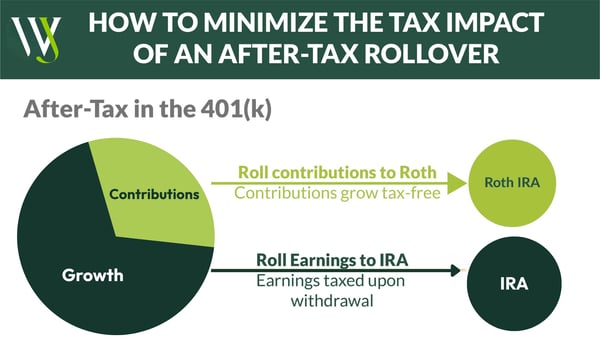
Advisor Tip: In order to complete the transaction with minimal tax impact, After-Tax contributions should be rolled over into a Roth IRA, ideally before growth occurs. If there are any earnings, they may be rolled into a Traditional IRA to avoid paying taxes today and defer taxes on the earnings into retirement.
To illustrate the value of this type of rollover, let’s take the example of Sarah, age 40, who has total cash compensation of $200,000 annually. She maxes out her Pre-Tax source of $24,500, Chevron contributes 8% of her compensation at $16,000, which allows her to contribute $31,500 to her After-Tax source (overall contribution limit to the ESIP 401(k) is $72,000 for under 50, $80,000 for over 50). Sarah plans to retire from Chevron at age 60.
At her age 60, assuming a 3% annual compensation increase and an 8% annual return on her After-Tax contributions and no adjustment on 401(k) limitations, Sarah would have saved approximately $2.15 million in her After-Tax source.
Her contributions would total approximately $903,000 over those 20 years, and the earnings on her After-Tax contributions would total approximately $1.25 million, which are now subject to her ordinary income tax rate at withdrawal.
If, instead of letting them grow in the 401(k), she had rolled over her After-Tax contributions annually to a Roth IRA, the $1.25 million she accumulated in earnings would be tax-free.
Disclosure: The 8% return is derived from tradethatswing. Impact of investing does not represent future values of any WJW account. The deduction of advisory fees, brokerage or other commissions, and any other expenses that would have been paid is not reflected in the calculation results.
_2026_Blog%20Featured%20Graphic_Impact%20of%20After-Tax%20Rollover%20(1).png?width=700&height=560&name=Chevron%20401(k)_2026_Blog%20Featured%20Graphic_Impact%20of%20After-Tax%20Rollover%20(1).png)
How to do an After-Tax Distribution in the 401(k) to a Roth IRA
Now that we have illustrated the immense value of rolling out the After-Tax contributions to a Roth IRA, it’s also important to understand the logistics required for this type of transaction in order to process it correctly and without impacting your savings and taxes.
In the Chevron ESIP 401(K) plan, an employee is allowed to roll out their After-Tax Supplemental contributions to a Roth IRA at any time in the year. This can be done on a monthly basis or once a year after the ESIP 401(k) contributions are completely maxed out. Once rolled into the Roth IRA, the funds should be reinvested to allow for long-term tax-free growth.
Contribution Freeze in the ESIP from After-Tax Distribution in the 401(k)
Many Chevron employees have After-Tax Basic contributions in their ESIP 401(K) plans. If an employee rolls out Basic contributions, it can freeze your Chevron employer contributions (the 8% match) for 90 days and you may lose out on these company contributions from your paycheck and Chevron. Therefore, you must understand how you can set the percentages of your contributions to maximize your After-Tax Supplemental contributions over your After-Tax Basic contributions.
Getting the Full Chevron Match Isn’t as Simple as “Set & Forget”
Learn How to Avoid this Common Mistake Here >>
If a Chevron employee is a high-income earner (cash compensation over $360,000) and they max out all ESIP 401(k) contributions before September 30, they may have the opportunity to roll over the After-Tax Basic contributions without impact from the freeze; they are already not receiving any company contributions for 90+ days after they max out and their company contributions will start back up in January of the following year. This can be a very valuable strategy to move all the After-Tax funds out of the ESIP 401(K) into a Roth IRA for tax-free growth.
At Chevron, both the ESIP 401(k) contribution choices and the in-service distribution After-Tax rollover strategy are more complex than they may appear at face value. Partnering with an advisor who understands how to maximize your savings through the ESIP 401(K) as well as minimizing your tax burden can add tremendous value over time to help you accomplish your retirement goals. Get started today by discussing your financial goals and Chevron benefits with the advisors at WJW who can offer tailored guidance to help you reach financial independence.