

Do you have an appropriate education savings plan? If you plan on providing funds for your children to go to college, you should think about incorporating the cost of education into your financial plan.
While the same tenets regarding saving for retirement apply, the earlier you start saving, the better it is for maximizing the potential growth. It can be difficult to save for college while you’re in the trenches of early parenthood and have a number of other expenses vying for your attention.
Savings Methods for College Education
In this article, you’ll learn about the average costs of higher education beyond college tuition, as well as various methods and strategies for saving, including the 529 savings plan and more.
Why Saving Early for Higher Education Plans Makes Sense
Starting an educational fund while a child is young gives your money the most time to grow and helps you to be tax-efficient. When working with our clients, we often find that making a lump sum contribution to a college fund when a child is very young can be an extremely effective savings option because your full investment will have many years to grow and compound, reducing the need for further financial contributions in the future.
You could potentially:
- Use a bonus to frontload contributions
- Diversify out of a concentrated company stock position to fund a college savings contribution
- Shift money from an inheritance towards your child's college fund, or
- Sell a restricted stock grant when it vests and use the proceeds
For most young families, balancing college funding and present-day expenses can be difficult, and generating that initial lump sum may seem like an insurmountable effort. However, monthly contributions from a young age are also extremely valuable in your efforts to plan for future education expenses, and there may be a few opportunities each year to fund them and get ahead of the game.
Why You Might Not Need to Plan for the Full Cost of your Student’s College Education
Education can be expensive, and thankfully, you may not need to cover the entire amount. Instead, aiming for 70-75% might be sufficient once you factor in the potential for financial aid, scholarships, work-study programs and contributions from other family members.
Over-funding college expenses can actually be more costly and time-consuming in the long run.
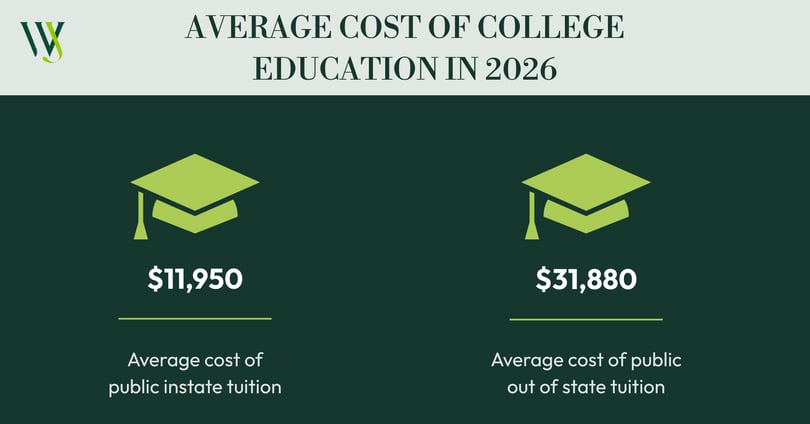
Source: https://research.collegeboard.org/trends/college-pricing/highlights
Tuition is one of the primary drivers of the overall cost of college. But what about other expenses? If you only plan for the costs of tuition, you may be overlooking other big ticket items like room and board, costs of books and supplies, various fees, and other expenses that will need to be paid.
What Methods for Education Savings are Available
The pros and cons of various educational savings options include:
- UTMAs (uniform transfers to minors), which are irrevocable savings programs that make funds available to your children once they reach the age of majority of 21. Note that the age of majority for UTMA accounts varies by state. Texas defaults to 21, but your state may differ.
(Warning! Assets owned by the child negatively impact financial aid to a higher degree.) - Prepaid tuition programs, which lock in today’s tuition rates and decrease the impact of inflation on your college savings efforts
- 529 college plans, which allow tax-deferred growth and tax-free withdrawals for qualified education expenses
How to Prioritize your Savings Methods to Build Sufficient Short- and Long-Term Assets are Available to You and Your Family
While you may be focused on offering your child or grandchild the gift of education, it's also important to note which other financial goals you should work toward first, to be most efficient in your savings and have flexibility within your plan.
Education funding is just a piece of an overall financial plan. You and your family will encounter different needs in each phase of your life, and it’s important to create a long-term financial plan that takes each life and savings goal into consideration.
At Willis Johnson Wealth, we focus on helping you identify your savings goals throughout each life stage, then work with you to create a plan that maximizes your opportunities for success. Learn more about the financial services we offer and our commitment to helping your family make the most of your resources when it comes to education and the future.